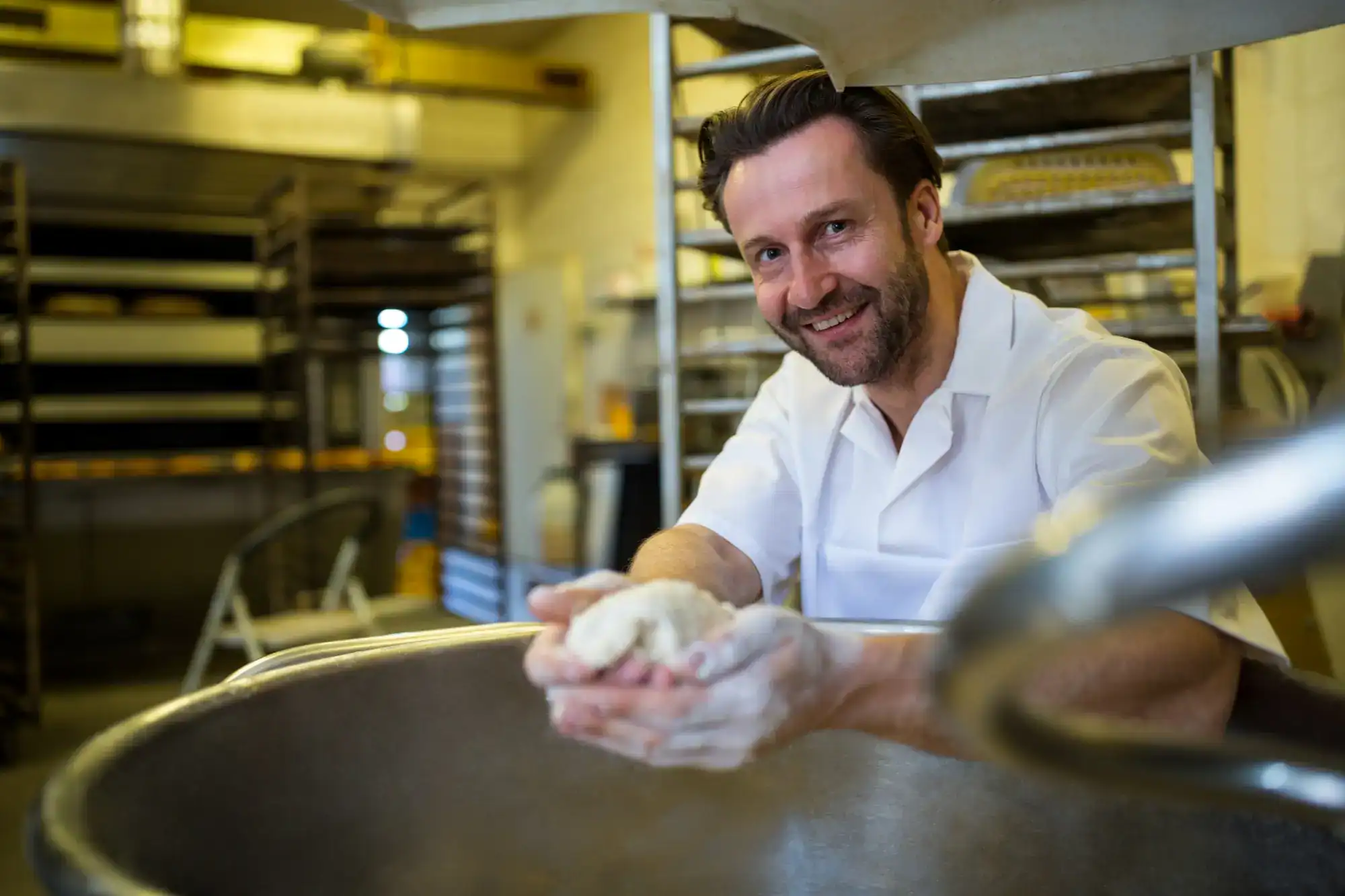
Moving from a professional kitchen into food manufacturing gives you a different way to use your culinary skills. The focus shifts from preparing dishes for service to developing products that can be made consistently at scale.
For chefs considering the move, a strong application should show more than creativity. It should demonstrate how you develop recipes, control costs, record your work and respond to feedback.
This guide explains the role and offers practical advice on preparing your CV, portfolio and kitchen trial.
What is a development chef?
A development chef creates new food products and improves existing recipes. In food manufacturing, the role connects culinary ideas with customer briefs and production requirements.
For a recent example, Greencore’s Development Chef advert describes recipe creation, customer presentations, collaboration with Technical, Process and Commercial teams and culinary support during factory trials.
The work therefore goes beyond producing an appealing kitchen sample. Consider a chilled pasta meal: how will the sauce perform after reheating? Can the preparation method be repeated consistently? Does the recipe meet the brief?
When preparing for this career move, practise explaining both your culinary choices and the questions you would need to investigate before production.
How do I become a development chef?
Start by identifying your transferable experience, then build evidence that you can develop food against a brief.
Make your kitchen experience relevant
Look for examples where you’ve:
- Created or improved dishes
- Costed recipes and managed yield
- Compared ingredients or suppliers
- Written recipes that other chefs can reproduce
- Maintained consistency across batches
- Changed a dish in response to feedback
Use specific examples on your CV. Explain your contribution rather than relying only on job titles and lists of kitchen duties.
Practise working to a product brief
Set yourself a development exercise with clear requirements. Define the target customer, eating occasion, portion size and ingredient budget.
For example, develop a chilled lunchtime soup within a specified ingredient cost. Prepare an initial recipe, assess it and make a revised version. Record what changed and why.
Present it honestly as a personal development project, not a commercially launched product.
Explore the manufacturing questions
Review your recipe and identify what you would need to investigate before producing it at scale.
Would the cooking method need adapting? How could different equipment affect the result? Which questions would you take to technical, process development or production colleagues?
You don’t need to claim knowledge you haven’t gained. Show that you recognise where further testing and specialist input are needed.
Tailor your application
Make your interest in food manufacturing clear. Lead with relevant recipe development, costing, consistency and teamwork.
If this would be your first manufacturing position, say so. Explain the culinary experience you bring and the areas you’re ready to learn.
Do you need a degree to be a development chef?
A degree is not a universal requirement. Check each employer’s criteria rather than assuming one qualification is essential across the industry.
Before committing to further study, compare several relevant role specifications. Identify whether your main gap is a qualification, manufacturing exposure or evidence of development work.
That will help you choose learning that supports the move you actually want to make.
What is the difference between a development chef and an NPD technologist?
Don’t assume the titles provide a complete division of responsibilities.
When comparing a Development Chef vacancy with an NPD Technologist vacancy, look closely at:
- Time spent on hands-on recipe development
- Ownership of project records and specifications
- Responsibility for costings
- Involvement in factory trials
- Customer presentations
- Coordination with process and technical teams
Ask the employer how responsibilities are divided. Use the answer to assess whether the position matches your strengths and the experience you want to build.
How much does a development chef earn in the UK?
A single salary figure would not give you a reliable picture of every development chef opportunity.
The two 2026 employer adverts discussed here do not publish numerical salary ranges, so they cannot establish a UK salary benchmark.
For a useful comparison, ask for the confirmed range for the particular vacancy and assess the whole package. Consider:
- Basic salary
- Contracted hours
- Bonus arrangements, if offered
- Pension and benefits
- Travel requirements and expenses
- Customer, project and team responsibilities
If you’re moving from hospitality, include any overtime, service charge or tips you would be leaving behind.
Discuss expectations early. Ask what experience the employer needs to see for appointment at different points within its salary range.
What hours does a development chef work?
Confirm the working pattern for each role. Don’t assume that moving into NPD automatically means fixed daytime hours or no weekend commitments.
Ask the employer:
- What are the normal start and finish times?
- How much site attendance is required?
- Is travel to customers, suppliers or other sites expected?
- Can trials or presentations change the normal schedule?
- Are evening or weekend commitments required?
- How are additional hours handled?
If working pattern is a main reason for your move, raise it before progressing too far. Ask for a realistic description of a normal week and a particularly busy one.
What should I put in a development chef portfolio?
Build a portfolio that shows how you develop an idea, not just how the finished dish looks.
Choose a small selection of relevant examples and give each one a clear structure.
The brief
Explain the target customer, eating occasion and requirements.
The recipe and method
Include ingredient quantities, portion size, batch yield and clear instructions.
Your development decisions
Show what you tested, what changed and why. Explain useful learning from ideas that didn’t work.
Commercial considerations
Include an ingredient costing where possible. State how you calculated it and distinguish ingredient cost from the full cost of manufacture.
Further development questions
Identify what still needs testing. Don’t present assumptions about shelf life, safety or production performance as proven results.
The outcome
Use clear photographs and an honest assessment. Distinguish between a personal concept, a restaurant dish and a commercially manufactured product.
Only include material you’re authorised to share. Leave out confidential recipes, customer briefs and former employers’ costings.
What happens in a development chef kitchen trial?
Ask for the assessment format in advance. The brief should establish what you need to prepare and how your work will be assessed.
Confirm:
- The task and time available
- Available equipment and ingredients
- Anything you need to bring
- Whether recipes or costings are required
- Whether you’ll present your food
- Any dietary or allergen requirements
To prepare, practise interpreting a brief, planning your time and recording a recipe accurately.
During the trial, explain your reasoning. Why did you choose that ingredient? What would you change after tasting? Which aspects would need further investigation before larger-scale production?
Listen carefully to feedback. Explain how you would use it in the next version rather than feeling you need to defend every part of your first attempt.
Ready to move into food manufacturing NPD?
Prepare a focused CV, build a portfolio that shows your development thinking and be clear about the work you want to move towards.
You don’t need to present yourself as an experienced manufacturing specialist if you’re making your first move. Show your culinary strengths, your understanding of the role and your willingness to learn.
Speak to the Harper Anderton team about your next move into NPD.